 |
|
 |
Course Description
This course covers several topics on fifth generation (5G) of wireless systems with a specific focus on the physical layer and air interface technologies. 5G systems are being developed by industry for deployment starting in 2020. In comparison to 4G systems, 5G systems are to support for 10 times higher the peak data rate, 10 times lower latency, and 10 times higher number of connected devices.
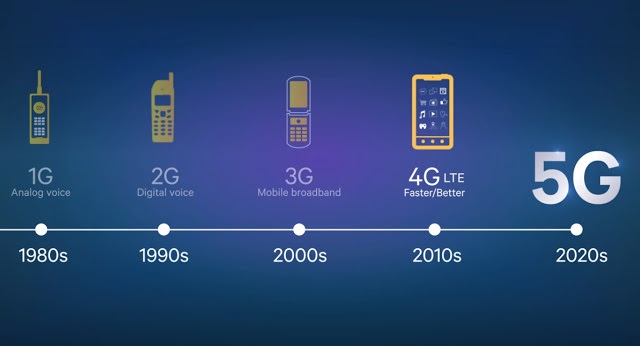
The course starts with a review of cellular standards evolution to today's state-of-the-art 4G LTE technology. Next, we move on to describe the requirement of 5G networks in terms of modulation, waveform design, and access methods. We compare the performance of different non-orthogonal multiple access methods as well as multiple variants of orthogonal frequency division multiplexing (OFDM), being considered by standardization bodies. We then look at the opportunities and challenges introduced by using mmWave frequency bands, massive MIMO, cloud-RAN, and full-duplex communications. The course involves reading fundamental current research papers and book chapters.
Prerequisite: An introductory course on digital or cellular communications is recommended.
Learning objectives
Students are exposed to the cutting-edge technologies that are the main topics for research and standardization in industry and many academic research groups. Upon completing the course, students will be able to:
Identify major requirements deriving 5G systems
Explain key 5G wireless features/advantages
Describe major 5G enabling technologies
Understand new radio (NR) architecture and system considerations
Engage in research for cutting-edge wireless technologies
Target Audience
Anyone interested in or working within the field of wireless mobile systems will benefit from this 5G course. The course is well-suited for graduate students in signal processing and wireless communications and design engineers who require an in-depth understanding of 5G principles, design concepts, and state-of-the-art research activities. An introductory course on digital or cellular communications is required.
Topics:
Overview of cellular systems (1 week)
Overview of 4G LTE technology (1 week)
Multiple access for 5G (2 weeks)
Waveform design for 5G (2 weeks)
Massive MIMO (4 weeks)
Cloud-RAN (1 week)
mmWave (2 weeks)
full-duplex (1 week)
Course Information
See the information in the links on the left.